


The Solitary Burden: Why 'Fixing Yourself' Isn't Enough for Lasting Change
I watched a friend, a brilliant software architect, spend two years in weekly therapy. He meticulously untangled childhood patterns, practiced mindfulness, and worked through every diagnosed 'issue.' He felt lighter, no doubt. But his burnout from 80-hour workweeks never lifted. His anxiety about layoffs at his big tech firm? Unchanged.
We've been sold a powerful, yet incomplete, story about mental health: that it's all about individual blame and personal responsibility. You're broken; you fix yourself. This narrative pushes us into endless self-fixing cycles, often leaving us feeling inadequate when the world outside our therapy room keeps hitting us hard. According to the American Psychological Association, nearly 60% of US adults sought mental health services in 2023. That's a huge number of people trying to 'fix' themselves. But what if the problem isn't just internal? What if the real therapy limitations lie in ignoring everything else?
Unmasking the Systemic Roots of Suffering: Beyond Personal Pathology
We've been taught that if you're struggling, it's a personal failing. Your mindset, your coping skills, your "inner child." Therapy often reinforces this idea, pushing us to introspect endlessly. But what if the problem isn't just inside you? What if much of your mental load comes from a system that's actively working against your well-being?
Systemic suffering isn't about individual neuroses; it's about how the very fabric of our society generates distress. Think about it: economic inequality isn't a personal choice. Discrimination, whether racial, gender-based, or otherwise, isn't a personal flaw. These are powerful, often invisible, forces that shape our lives and mental health, often outside our control.
These "invisible forces" don't just exist in a vacuum. They manifest as chronic stressors that chip away at our resilience. They show up as the overwhelming debt burden from college, the relentless pressure to perform in a gig economy, or the constant low-level anxiety of not being able to afford a home. Do you honestly believe every single person struggling with burnout just needs a better meditation practice?
Consider collective trauma—the intergenerational impact of historical injustices like residential schools or systemic racism. It's not something you can "heal" with individual therapy alone. It requires systemic change and collective recognition. According to a 2022 WHO report, people living in poverty are disproportionately affected by mental health conditions, with rates of depression up to twice as high as those with higher incomes. That's not a coincidence; it's a consequence of economic stress.
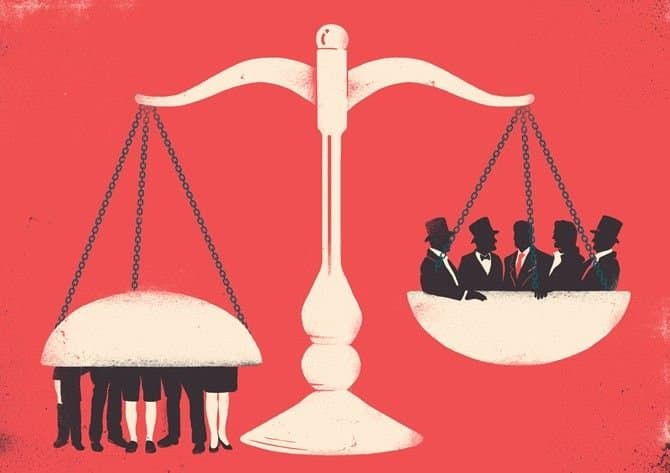
Blaming the individual for systemic issues is like telling a fish to swim better when the river's full of pollution. It ignores the actual problem. When we talk about social determinants of health, we mean the conditions in which people are born, grow, live, work, and age—factors like housing, education, job security, and access to healthcare. These aren't personal responsibilities; they're institutional biases and societal structures that profoundly impact individual mental and physical well-being.
So, what are these systemic roots? They're complex, intertwined, and often hidden in plain sight:
- Economic Stress: Skyrocketing cost of living, stagnant wages, precarious job markets.
- Systemic Oppression: Racism, sexism, ableism, homophobia baked into institutions.
- Collective Trauma: Historical injustices and ongoing violence impacting communities.
- Environmental Degradation: Climate anxiety, lack of green spaces, pollution.
- Institutional Bias: Healthcare disparities, educational inequality, discriminatory legal systems.
Recognizing these external pressures doesn't absolve you of personal responsibility, but it reframes the fight. It shifts the narrative from "What's wrong with me?" to "What's wrong with the world around me, and how can I navigate or change it?" It's a critical distinction if we're serious about genuine, lasting well-being.
The Echo Chamber of Blame: How Society's Wounds Become Our Own
You probably think your anxiety is a personal failing. Maybe you blame your "perfectionism" or your "poor time management" for the constant low hum of stress. But what if that feeling of inadequacy isn't some deep-seated flaw, but rather an echo? An echo of a world that demands impossible output, then tells you to just meditate your way out of burnout. That's the insidious nature of internalized oppression—when societal pressures twist into self-blame.
Think about the ambitious professional, pulling 60-hour weeks, fueled by caffeine and a vague dread of falling behind. They're told to "lean in," to "hustle harder," to "optimize every minute." When they inevitably hit a wall—exhausted, cynical, unable to focus—the whisper starts: You're not good enough. You can't handle it. This isn't a personal pathology. It's the psychological toll of living in a system that equates self-worth with endless productivity. It's burnout culture manifesting as individual shame.
We see this everywhere. The young person struggling to afford rent while working two jobs, then feeling guilty for not saving enough. The parent juggling childcare and a demanding career, apologizing for not being "present" enough. Society tells us to "cope," to "build resilience," to "manage our stress." This is gaslighting, plain and simple. It shifts the burden of systemic issues—like economic inequality, unsustainable work demands, or inadequate social support—onto the individual. It suggests your suffering is a personal problem, not a collective one.
Your chronic stress isn't just about your individual stress response. It's often a direct consequence of living with collective anxiety, where global instability, climate change, and political polarization are constant background noise. According to a 2023 Gallup poll, 79% of US employees experience burnout at least sometimes, with 28% feeling it "very often or always." These numbers aren't individual failures; they reflect a widespread societal pressure cooker. When nearly 8 out of 10 people feel this way, the problem isn't their personal coping mechanisms—it's the system they're coping with.
The mental health stigma often reinforces this blame cycle. If you admit you're struggling, the immediate response is often "what are *you* doing wrong?" not "what is *our society* doing wrong?" We're taught to seek individual solutions for what are, in reality, shared wounds. Your low self-worth, your anxiety, your exhaustion—these aren't just quirks of your personality. They're often the psychological fallout of being told, subtly or explicitly, that you must constantly strive, compete, and perform to earn your place, even when the rules of the game are rigged.
From Self-Correction to Systemic Advocacy: New Directions in Healing
I once watched a friend burn out after six months in a high-stress startup. She was doing all the "right" things—therapy twice a week, meditation apps, journaling—but the 80-hour weeks and constant pressure were relentless. Her therapist was great, but the focus was always on *her* coping mechanisms, never on the system that was actively grinding her down. This is where we need a radical shift. The path forward isn't just about individual resilience; it’s about recognizing that sometimes, the problem isn’t you—it's the world around you. We need therapeutic approaches that put social justice at their core. These aren't just feel-good ideas; they're vital frameworks like liberation psychology and community psychology that pull back the curtain on how power, inequality, and systemic injustices manifest as personal suffering. They argue that true healing often requires confronting and changing the oppressive structures that make us sick in the first place. Think about it: if your anxiety stems from precarious housing or a racist workplace, no amount of deep breathing will fix the root cause. This perspective emphasizes collective care and mutual aid, pushing back against the hyper-individualism that often leaves us feeling isolated in our struggles. When a community rallies to support a struggling family, that's more than charity—it’s a powerful act of collective healing. It builds social fabric. According to a 2020 Cigna study, 61% of adults in the US reported feeling lonely, a staggering figure that underscores the need for stronger community bonds and shared responsibility for well-being. This shift from "me" to "we" reduces the intense self-blame many feel, empowering individuals by showing them their struggles are often shared and rooted in larger societal issues, not personal failings. So, what does this look like in practice? It’s not about ditching your therapist. It's about expanding the scope.- Liberation Psychology: This approach focuses on the social and political context of psychological problems, helping individuals understand how oppression impacts their mental health and encouraging collective action for social change. It's about consciousness-raising as much as individual insight.
- Community Mental Health: Instead of only clinic-based treatment, this model emphasizes prevention and support within community settings—think peer support groups, local advocacy, and accessible services that address systemic stressors like poverty or lack of safe spaces.
- Social Justice Therapy: Therapists adopting this lens explicitly integrate discussions of power, privilege, and oppression into sessions. They help clients recognize how external forces contribute to their distress, fostering a sense of agency to challenge those forces, whether through personal boundary setting or broader advocacy.
Beyond the Couch: Integrating Collective Care into Personal Well-being
You’ve spent time on the couch, talked through your childhood, maybe even journaled for months. Still feel that nagging sense of unease? It’s not just you. The individual fix-it approach misses a huge piece of the puzzle: the world you live in. True well-being isn't a solo sport; it’s built on collective care.
If you keep hitting the wall in therapy, maybe the problem isn't just internal. It's time to expand your focus. Here’s how to integrate a systemic perspective into your personal well-being journey and find real agency:
-
Engage Locally with Community Support: Start small. Find a local mutual aid group — even a neighborhood WhatsApp chat for sharing resources or asking for help. Join a community garden in your area. Volunteer for a local food bank for an hour a week. These aren't just feel-good activities; they rebuild the social fabric that’s frayed for so many of us. According to a 2023 report from the US Surgeon General, loneliness and isolation can increase the risk of premature death by 26%, comparable to smoking 15 cigarettes a day. Connection isn't optional; it's preventative medicine.
-
Cultivate Critical Consciousness: Read widely. Not just self-help books, but history, sociology, and economics. Understand how systemic issues like economic inequality, racial injustice, or gender discrimination impact mental health. Follow journalists and academics who challenge mainstream narratives about individual failure. This isn't about blaming; it's about seeing clearly how power structures shape your experience. Can you honestly say your stress isn't tied to global economic forces?
-
Find Your Collective Agency Through Social Activism: Join a local advocacy group. Support a tenant’s rights organization. Show up for a city council meeting about affordable housing. Even signing a petition or sharing information about a local issue counts. When you act collectively, you move from passive recipient of circumstance to active shaper of your environment. That shift from helplessness to power is a profound therapeutic experience in itself.
-
Seek System-Aware Therapy: When looking for a therapist, ask direct questions. For example: "How do you integrate systemic issues into your practice?" "What's your understanding of how economic stress or discrimination impacts mental health?" A good therapist won't just ask about your mother; they'll ask about your landlord, your boss, your student loan debt, and your local government. They understand that personal struggles often echo societal wounds.
Think of Maria, a product manager in Toronto. She spent years in therapy for anxiety, only to realize her panic attacks often spiked after dealing with a precarious housing market and seeing friends priced out of their neighborhoods. When she joined a local housing advocacy group, her anxiety didn't vanish overnight, but her sense of powerlessness did. She found purpose, and a community, in fighting for something bigger than herself. Her system-aware therapy wasn't just about coping; it was about understanding and acting.
Your well-being isn't just your responsibility. It's a collective project.
The Myth of the 'Broken Individual': Why Blaming Yourself Backfires
We’ve been sold a dangerous myth: that suffering, especially mental anguish, is a personal failing. You're anxious? You're depressed? The immediate response from countless self-help gurus and even some therapists is to look inward. Fix your mindset. Optimize your routine. It tells you your distress comes from a glitch in you, not from the rigged game we’re all playing.
Consider a product manager in Austin, Texas, working 60-hour weeks, constantly on call, watching her rent jump 20% in two years. She feels burned out, irritable, and struggles to sleep. Is her exhaustion a 'personal problem' to be fixed with a gratitude journal, or a perfectly rational response to an unsustainable system? Pathologizing normal human responses to abnormal circumstances doesn't help. It just makes you feel worse for feeling bad.
This exclusive focus on individual resilience is not just unhelpful; it's actively harmful. It fosters a self-blame trap. When your "self-care" routine can't fix the gnawing stress of stagnant wages or a precarious job market, you internalize that failure. You start thinking, "I must not be trying hard enough. I’m not resilient enough." This is toxic positivity in disguise, telling you to just smile through the systemic injustice.
The limitations of 'self-care' become glaringly obvious when systemic issues are the real culprits. You can't meditate away a landlord's eviction notice. You can't journal your way out of student loan debt. You definitely can’t yoga your way to affordable healthcare. According to a 2023 Pew Research Center study, 66% of US adults say financial worries are a major source of stress. No amount of individual "fixing" will change that macro reality.
This blame game diverts attention from where it actually belongs: on the structures that contribute to widespread distress. It leaves you feeling isolated, convinced you're uniquely broken. But your struggles aren't always unique; often, they're shared experiences rooted in shared societal pressures.
Reclaiming agency means shifting from self-blame to understanding context. It means de-pathologizing distress—recognizing that your anxiety might be a signal, a valid response to an invalid situation. When we stop asking, "What's wrong with me?" and start asking, "What's wrong with this system?" that's where genuine power and change begin.
Reclaiming Our Collective Well-being: A Call to Shared Humanity
The journey to genuine well-being isn't just an internal monologue. We've spent too long believing that personal grit alone can fix the profound anxieties and discontents of modern life. True healing—an integrated well-being—demands we look beyond our own minds and confront the external realities shaping us. It means understanding that your stress isn't always a personal failing; sometimes, it's a rational response to an irrational system.
This isn't about absolving individual responsibility, but about expanding our collective responsibility. Compassionate care means recognizing that the future of mental health isn't solely in therapy rooms, but in our communities, our workplaces, and our policies. It involves building systems that support human flourishing, rather than just patching up the damage they cause. According to a 2022 report by the American Psychological Association, socioeconomic status strongly correlates with mental health outcomes, with individuals in the lowest income bracket reporting significantly higher rates of distress.
Empowerment doesn't just come from self-talk; it comes from shared humanity, from understanding that our struggles are often interconnected. When we see a problem as shared, we can act together. This shift moves us from individual blame to collective action, creating a more just and supportive world where suffering is met with understanding, not just a prescription for self-fix.
Maybe the real question isn't how to fix ourselves. It's why we're living in a world that keeps breaking us.
Frequently Asked Questions
How does traditional therapy often fall short in addressing systemic issues?
Traditional therapy often falls short by focusing primarily on individual pathology and coping mechanisms, rather than the external societal structures that create distress. It can inadvertently place the entire burden of change on the individual, overlooking the need to reform oppressive systems like discriminatory housing policies or inadequate healthcare access. This approach treats symptoms without addressing the underlying societal disease.
What are some examples of systemic factors that contribute to individual suffering?
Systemic factors contributing to suffering include poverty, racial discrimination, lack of affordable healthcare, and environmental injustice. These external pressures, like wage stagnation or a broken justice system, profoundly impact mental health by creating chronic stress, insecurity, and trauma for individuals.
Can I still benefit from individual therapy with this new perspective?
Yes, individual therapy remains valuable for developing personal resilience and processing trauma, even when acknowledging systemic issues. It equips you with essential coping skills and self-awareness to navigate a challenging world, helping you manage anxiety or depression while also engaging in broader advocacy. Consider therapists who integrate social justice perspectives into their practice, like those practicing liberation psychology.
What practical steps can I take to engage in collective healing or advocacy?
Engage in collective healing by joining community organizing groups, supporting policy changes, or participating in mutual aid networks. Advocate for specific legislation—like universal basic income or comprehensive mental health services—or volunteer with organizations such as the NAACP or local housing coalitions. Start by dedicating just one hour a week to research or local action to make a tangible impact.













Responses (0 )