


The Invisible Currents That Pulled Middle Class Security Under
I saw a guy last week, probably my age, mid-30s, staring at a gas pump display like it held the secrets to the universe. He wasn't just checking the price; he looked utterly defeated. This quiet anxiety, this feeling of constant financial instability despite putting in the work, is the new normal for many ambitious professionals.
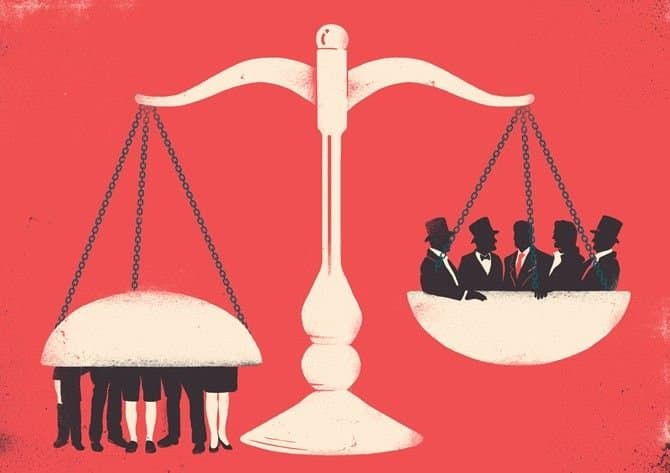
It's easy to blame yourself, to think you're not saving enough or hustling hard enough. But that narrative misses the point entirely. The truth is, middle class financial security didn't just disappear overnight; it eroded over decades due to powerful, systemic forces beyond any single person's control.
Consider this: according to the Pew Research Center, middle-income households saw their share of aggregate US income fall from 62% in 1970 to just 42% in 2018. This financial stability erosion isn't about your personal failings. We'll unpack the real economic shifts, the ones that make traditional advice feel useless and leave millions feeling perpetually behind. Understanding this systemic financial change is your first step to fighting back.
Beyond the Paycheck: How the 'Good Deal' for Workers Faded Away
Talk to anyone who started their career before 1980 and they'll tell you about a different world. A world where a single income could support a family, buy a house, and even fund a comfortable retirement. That wasn't luck; it was a functioning social contract, a "good deal" baked into the post-war economic model. Companies and workers largely grew together, sharing in the prosperity. Productivity gains often translated directly into fatter paychecks. Then, things changed. Quietly, incrementally, the threads of that contract started to unravel. The most glaring symptom? Wage stagnation. For decades, worker pay simply stopped keeping pace with the value they generated. According to the Economic Policy Institute, between 1979 and 2020, net productivity in the US grew by a staggering 61.8%. Over that same period, hourly compensation for the vast majority of workers rose by just 17.5%. That's a massive productivity-wage gap, and it's not because people stopped working hard. This decoupling wasn't an accident. It was the result of fundamental labor market shifts and policy choices. The bargaining power of workers eroded, while corporate focus shifted heavily towards shareholder value above all else. You saw it in the decline of union membership, the rise of automation without corresponding worker upskilling, and a globalized labor pool that suppressed wages. Consider a factory worker in Ohio. In 1965, he started on the line, earned a decent wage, bought a modest home for $15,000—about 2.5 times his annual salary—and sent his kids to state college for a few hundred bucks a semester. Fast forward to 2024. His grandson works in a similar manufacturing role, maybe for a tech company assembling circuit boards. His wage growth has been minimal, barely ticking up with inflation. That same house now costs $300,000—six times his salary—and college tuition is $15,000 a year. He's working harder, but the economic math just doesn't add up anymore. This isn't about individual failings or poor budgeting skills. It’s about a systemic shift where the fruits of economic growth largely bypassed the average worker. Here's what quietly undercut that "good deal":- Decline of Union Power: Union membership in the US dropped from over 20% of private-sector workers in 1983 to just 6% in 2022. This gutted collective bargaining strength.
- Shift to Shareholder Primacy: Corporate boards began prioritizing stock prices and executive bonuses over employee compensation. Profits got routed to investors, not wages.
- Automation Without Redistribution: New technologies increased output but often reduced the need for human labor, without corresponding mechanisms to share the wealth generated.
- Globalization of Labor: Companies could outsource jobs to lower-wage countries, creating downward pressure on domestic salaries.
The Hidden Costs: Systemic Shifts That Drained Household Budgets
The middle class didn't just see their paychecks stagnate. A bigger problem was the rising cost of living, which quietly turned necessities into luxuries. You could earn the same income, but your money bought less and less of what actually mattered: a home, good health, and an education for your kids.
Think about it. Healthcare, education, and housing—the three pillars of a stable life—skyrocketed past inflation for decades. This wasn't some natural market correction. It was a systemic shift that forced families to spend more for the same quality of life, often going into deep debt just to keep pace.
Healthcare inflation is a brutal example. According to the Bureau of Labor Statistics, medical care costs in the US have increased by over 160% since 2000, while overall inflation rose about 85%. That means your health insurance premiums and out-of-pocket expenses chew up a much larger chunk of your income than they did for your parents. A single emergency room visit can wipe out months of savings. Is that what financial security looks like?
Education costs tell a similar story. Public university tuition and fees in the US have climbed over 200% since 2000. Graduates now leave school with an average of $30,000 in student loan debt, according to the Federal Reserve. This isn't just a burden; it delays homeownership, family formation, and retirement savings for millions. It’s a systemic drag on ambition.
Housing? Forget it. The median home price in the US hit $417,700 in Q1 2024, up from $170,000 in 2000. Rent hasn't been much kinder. Try saving for a down payment when your rent eats 40% of your take-home pay. This isn't just about supply and demand; it's about housing becoming an investment vehicle rather than a fundamental human need.
Then there's the great pension reform. Companies used to offer defined benefit plans—guaranteed payouts in retirement. Now? Almost everyone gets a defined contribution plan, like a 401(k) in the US or a private pension in the UK. The risk shifted entirely to you. You're responsible for investing, managing, and hoping your savings last. If the market tanks, that's your problem.
This subtle change means fewer people have a predictable income stream in retirement. It forces many to work longer, past what's healthy or desired. Did you sign up to become a full-time portfolio manager just to retire?
Finally, financialization and the resulting consumer debt burden tightened the noose. The economy shifted focus from producing goods to making money from money. Credit became easier to get, often at high interest rates, pushing people into a cycle of debt. Suddenly, every middle-class family needed a spreadsheet to manage their multiple monthly payments.
This isn't an accident. It's the outcome of policies that prioritized financial markets over household stability. This environment fosters a vicious cycle of:
- Rising costs for essentials (healthcare, housing, education)
- Stagnant wage growth (as discussed in the previous section)
- Increased reliance on credit to cover the gap
- Accumulation of consumer debt, making it harder to build wealth
A friend of mine, a mid-level manager in Toronto, makes CAD $90,000 a year. Good money, right? But his rent is $2,800/month, his student loan payment is $450, and his family health plan is $300. After taxes, he's barely breaking even, let alone saving. He’s stuck on a treadmill, running faster just to stay in place. What good is a decent salary if the system quietly siphons it all away?
The Illusion of Progress: Why 'More Money' Doesn't Mean More Security
You probably make more money than your parents did at your age. A lot more, in nominal terms. But do you feel more financially secure? For most ambitious professionals between 22 and 35, the answer is a resounding "no." We're caught in a bizarre economic paradox: our paychecks are bigger, yet our actual purchasing power keeps shrinking.
Here's the harsh truth: the dollars you earn today buy significantly less than the same number of dollars bought a generation ago. Your grandfather might have landed a factory job at 22 making $25,000 a year, bought a house for $60,000, and put two kids through college with relative ease. Try that on an $80,000 salary today. A median home in the US now costs over $400,000. Public university tuition can hit $10,000-$20,000 per year, even in-state. It's a completely different game.
This isn't about individual spending habits. It's about a systemic erosion of your real purchasing power. According to the Bureau of Labor Statistics, real average hourly earnings for production and non-supervisory employees only increased by about 9% between 1979 and 2022. That's over four decades. Meanwhile, the costs of essential goods and services—housing, healthcare, education—have skyrocketed far beyond general inflation.
You feel like you're working harder, perhaps even picking up a side hustle or two, just to maintain a lifestyle that used to be standard for the middle class. This constant grind creates a profound psychological impact. You're "achieving" higher income milestones, yet the finish line for true financial stability seems to recede further with every step. That feeling of being perpetually "stuck" despite your best efforts? That's the middle class struggle playing out.
This illusion of progress leaves households dangerously fragile. Any unexpected bump in the road can send everything tumbling. A sudden job loss, a medical emergency, or even a major car repair can turn into a full-blown cost of living crisis. Why? Because most people simply don't have the buffer they need. The Federal Reserve's 2022 Survey of Consumer Finances revealed that 37% of Americans couldn't cover a $400 emergency using cash or its equivalent. Think about that: almost two-fifths of the country can't handle a minor financial shock.
This economic fragility isn't just about low savings rates. It's exacerbated by record levels of household debt—student loans, mortgages, credit card balances—that chew up a larger portion of income than ever before. You're making more, but you're also paying more just to exist. Your 'higher' income isn't extra cash; it's simply keeping pace with an ever-inflating baseline cost of living. It's a treadmill, not a ladder. And when the treadmill speeds up, you risk flying right off.
Reclaiming Your Foothold: Strategies for Navigating a Transformed Economy
Look, the economy changed. That's a fact. The rules your parents played by for financial security just don't apply anymore. Blaming yourself for feeling squeezed is a waste of energy. The smart move isn't to work harder at the old game; it's to adapt your strategy to the new reality. You need to build financial resilience, not just chase a bigger paycheck.
Forget the old advice about a single career path and a comfortable retirement plan—those were luxuries of a different era. Your focus now needs to be on creating a personal economic moat around your life. Here's how you start building that.
-
Diversify Your Income Streams (Seriously)
Relying on one employer for 100% of your income is a massive risk. It puts you at the mercy of their quarterly reports, market shifts, and management whims. Think of income diversification not as a "side hustle" but as an essential financial resilience strategy.
This isn't about working yourself to death. It's about strategic additions. Maybe you use a skill you already have—like a friend of mine, a software engineer in London, who spends 5-10 hours a week doing freelance coding projects on Upwork, adding £800-£1,200 to his monthly income. Or perhaps you explore passive income through dividend-paying ETFs like VOO or VUSA, which funnel small but consistent payments into your account. The goal is multiple streams, so if one dries up, you're not left stranded.
-
Invest in Strategic Skill Development
The job market isn't static. Skills that paid well five years ago might be commoditized or automated tomorrow. Your biggest asset is your ability to learn and adapt. Focus your energy on acquiring skills that solve pressing business problems and are difficult for AI to replicate entirely—at least for now.
Think data analysis with Python, advanced prompt engineering for tools like ChatGPT and Claude, cloud computing certifications (AWS, Azure), or complex project management. These aren't cheap courses, but they offer huge returns. Learning a new, high-demand skill can often add $10,000 to $30,000 to your earning potential within a year or two. According to Glassdoor data, a certified AWS Solutions Architect in the US earns an average of $140,000, significantly more than a generic IT role.
-
Build an Aggressive Emergency Fund
This isn't just "three months of expenses" anymore. In an economy where layoffs can hit without warning and job searches stretch longer, you need more. Aim for 6-12 months of living expenses, liquid and easily accessible. This fund isn't for investing; it's for survival. It's your buffer against the systemic shocks we've already covered.
Park this money in a high-yield savings account. Accounts from online banks like Ally or Marcus currently offer 4.25% APY or more, meaning your cash actually earns something while it sits there. This isn't theoretical advice; it's a hard lesson. According to the Federal Reserve's 2023 Survey of Household Economics and Decisionmaking, 37% of Americans couldn't cover a $400 emergency with cash. That's a terrifying statistic for anyone trying to build financial security.
These strategies aren't about getting rich quick. They're about creating a strong, multi-layered financial defense system. You're not just saving; you're building a fortress against the economic instability that has quietly eroded the middle class for decades. Your personal financial plan must acknowledge the systemic risks, not pretend they don't exist.
The Budgeting Blinders: Why Conventional Wisdom Misses the Mark
You’ve heard it a thousand times: "Just cut out your lattes." Or "Make a budget and stick to it." This isn't just outdated financial advice; it's a distraction. It blames individual spending habits for systemic problems, making you feel like a failure when the math just doesn’t add up.
There's a product manager in Austin who makes $110,000 a year. He tracks every dollar, packs his lunch, drives a 2015 Honda, and still feels like he's treading water. His rent on a 1-bedroom apartment jumped 20% last year to $2,200. His health insurance premiums climbed another 12%. Is his $4 coffee really the problem when housing and healthcare eat up half his take-home pay?
The idea that you simply need to "pull yourself up by your bootstraps" in this economy? That's a myth, designed to keep you focused on micro-decisions while macro-forces erode your financial stability. People aren't lazy or spendthrift; the game itself changed. According to the Economic Policy Institute, typical workers' wages grew just 9.2% from 1979 to 2018, while productivity soared 70%. Your individual hustle can't overcome that kind of gap.
Here's why relying solely on old-school budgeting is a trap:
- It ignores fixed costs. Housing, childcare, student loans, and healthcare aren't optional luxuries. They're often the biggest line items in your budget, and their prices have far outstripped wage growth for decades. Trying to "cut back" on these is like telling someone to flap their arms harder to fly.
- It distracts from wealth-building. When you're constantly focused on penny-pinching, you lose sight of bigger levers. Generating more income, strategic investing, and skill development are often ignored in favor of minimizing small expenses.
- It fosters self-blame. If you believe your financial struggles are entirely due to your own poor choices, you won't look for systemic solutions or advocate for change. This individualizes a collective problem.
The conventional wisdom about budgeting often starts from the flawed premise that everyone operates on a level playing field. It assumes your income keeps pace with the cost of living, that you have control over your biggest expenses, and that a few skipped takeout meals will magically create a substantial emergency fund. That's just not reality for most ambitious professionals starting out today.
True financial agency isn't about perfectly optimizing a shrinking pie. It's about understanding why the pie is shrinking, and then strategically positioning yourself to grab a bigger slice or bake a new one. This means moving beyond the narrow focus on individual spending and recognizing the profound impact of the economic shifts happening around you. It's about playing a different game, not just trying harder at a losing one.
`The Road Ahead: Building Security in an Uncertain Future
The old rules for financial security are dead. Understanding why they died—the systemic shifts in wages, healthcare, and housing—is the actual first step to building a future where you're not constantly playing catch-up.
Proactive financial management isn't just about cutting lattes; it's about seeing the bigger picture. You need to develop economic literacy that goes beyond personal budgeting apps. This means recognizing where the game changed and adapting your future financial planning accordingly.
Most people are still trying to win yesterday's game. According to a 2023 Federal Reserve report, 37% of Americans couldn't cover an unexpected $400 expense. That statistic isn't just about individual spending habits; it's a symptom of a deeper, structural problem that demands more than conventional wisdom.
Your goal isn't just to save more. It's to understand the forces working against your savings and then build strategies—diversified income streams, strategic skill acquisition, smart investments—that counteract them. This isn't passive resignation. This is informed action.
Maybe the real question isn't how to claw back security. It's why we let the system steal it in the first place.
`Frequently Asked Questions
What specific economic changes contributed most to the decline of middle-class financial security?
Globalization and automation significantly eroded middle-class job security and wage growth. The shift from manufacturing to a service economy, coupled with declining union power, suppressed real wages while housing, healthcare, and education costs skyrocketed by over 300% since 1980. This created a massive wealth gap, making upward mobility much harder.
How has the concept of a 'good job' or 'stable career' evolved over these decades?
The concept of a 'good job' shifted from lifelong employment with a pension to one demanding constant skill adaptation and flexibility. Defined-benefit pensions largely vanished, replaced by 401(k)s, putting the onus of retirement savings entirely on the individual. Today, job security means continuous learning and building a diversified skillset, often requiring a side hustle to supplement income.
Are there any policy changes that could help restore middle-class financial stability?
Yes, policies aimed at increasing wage power and reducing essential costs could restore stability. Reforming tax codes to favor workers over capital, strengthening unionization rights, and investing in universal affordable healthcare and housing are crucial steps. This would directly boost disposable income and reduce the financial burden on middle-income families.
What role does individual financial literacy play versus broader economic policy in this context?
Individual financial literacy is critical for personal resilience, but broader economic policy dictates the playing field. Smart budgeting or investing with apps like Mint (free) helps navigate tough times, but cannot counteract stagnant wages or soaring healthcare costs. Systemic issues require systemic solutions; individual effort alone is insufficient against decades of policy shifts.













Responses (0 )