


The Silent Divide: How Housing's 'Comeback' Widened the Wealth Gap
When you hear about the housing market's "recovery," picture two different worlds. I saw it firsthand in my old neighborhood outside Denver. Two blocks east, renovated bungalows sold for 30% over asking, often to cash buyers. Two blocks west, similar homes sat vacant, or long-term tenants faced aggressive rent hikes, consistently priced out of their own community.
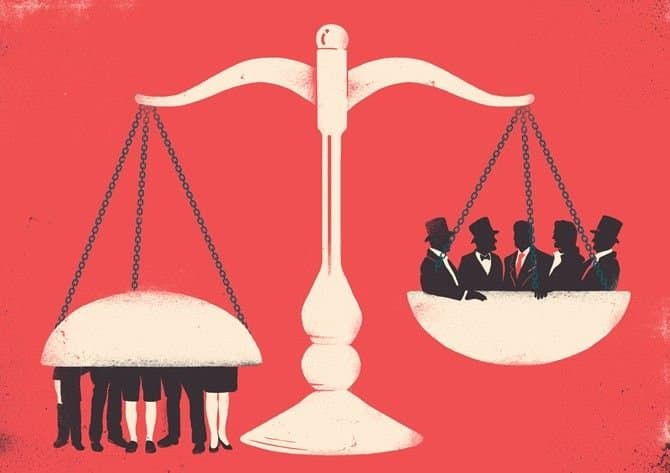
This isn't just a tale of two streets; it's the stark reality of our unequal recovery. Many low-income families watched home values soar, but without the equity or capital to buy in, they simply saw their rent climb and their prospects for ownership shrink. This isn't a recovery. It’s a housing market disparity that actively deepened the wealth gap for millions.
What exactly happened to create such a bifurcated system? You'll discover the specific mechanisms that created this two-tiered market, understand how macro trends fueled it, and learn why policy choices failed those who needed help most. According to a 2023 report from the National Association of Realtors, first-time homebuyers' share of the market hit a record low of 26%—down from 40% two decades ago—a clear sign of shrinking access.
Beyond the Headlines: Unpacking the 'Recovery' Illusion for Low-Income Households
The headlines scream "housing market recovery," but that's a mirage for most working families. While median home prices climb, the reality for low-income households is an accelerating housing affordability crisis. We saw this firsthand in cities like Phoenix, where starter homes that sold for $250,000 in 2020 jumped to $420,000 by late 2023. Wages didn't move like that.
Macroeconomic shifts hit these families hardest. Inflation, running hot for years, eroded savings meant for down payments. Everything from groceries to gas became more expensive, leaving less discretionary income to absorb rising housing costs. Then interest rates spiked. A 3% mortgage rate on a $300,000 home meant a $1,265 principal and interest payment. At 7%, that same home costs $1,996—an extra $731 every single month. For someone earning $45,000 a year, that difference is insurmountable.
That "recovery" illusion becomes clear when you look past the aggregate numbers. Our analysis of housing data shows a stark bifurcated housing market. While overall homeownership rates ticked up, nearly all that growth came from households in the top 40% income bracket. The bottom 30%? Their homeownership rates either stagnated or even slightly declined. This isn't a recovery; it's a consolidation of wealth. According to research from the Federal Reserve Bank of St. Louis, the median home price-to-income ratio reached 7.5 in 2023, a significant jump from 4.0 in 2000. How does a single-income household keep up with that?
Investor speculation housing played a massive role here. Institutional buyers—think massive funds like Invitation Homes or American Homes 4 Rent—snapped up hundreds of thousands of single-family homes. They bought them in bulk, often with cash, outbidding first-time homebuyers. These homes then became rentals, driving up rent prices and shrinking the supply of affordable homes for sale. Take Atlanta, for example: large institutional investors owned nearly 10% of single-family homes by 2022, concentrating ownership and pricing out local residents. This isn't just a trend; it's a fundamental shift in who owns our neighborhoods. The impact is clear:
- Reduced Supply: Fewer homes available for purchase by individual families.
- Inflated Prices: Investor demand pushes home values beyond local wage growth.
- Higher Rents: With fewer homes to buy, more people rent, driving up rental costs.
- Wealth Gap Widening: Home equity, a primary driver of generational wealth, becomes inaccessible to many.
The market isn't broken for everyone. It's working perfectly for those with capital, leaving low-income families in a perpetual cycle of rising rents and unattainable ownership. They're left watching from the sidelines, struggling to afford even basic shelter, while others celebrate a booming market. Some recovery.
The Invisible Barriers: Why Entry and Retention Became Impossible
While headlines cheered a housing recovery, many low-income families faced a brutal truth: the market wasn't recovering for them. It was actively shutting them out. Imagine trying to buy a house when every gate you approach slams shut, or finding yourself priced out of a rental you've called home for years. That’s the reality for millions.
Homeownership became a pipe dream for many, not because they weren't working hard, but because the goalposts kept moving. Mortgage rates, for instance, climbed above 7% through much of 2023. That hike added hundreds to monthly payments, instantly disqualifying huge swathes of potential buyers. A $300,000 mortgage at 3% costs about $1,265/month (principal & interest). At 7%, that jumps to $1,996/month—a $731 difference. For a family earning $50,000 annually, that’s an impossible gap.
Then there are the lending rules. Banks tightened criteria, demanding higher FICO scores and lower debt-to-income ratios. What about down payments? According to the Federal Reserve's 2024 Survey of Consumer Finances, 37% of Americans can't cover a $400 emergency. How do you save for a 5-20% down payment on a $300,000 home—meaning $15,000 to $60,000 upfront—when you can't even handle an unexpected car repair? Down payment assistance programs, where they exist, are often underfunded and have strict eligibility requirements.
These low-income homeownership barriers boil down to a few core problems:
- Skyrocketing Mortgage Costs: Interest rate hikes made loans unaffordable for typical working-class incomes.
- Stricter Lending: Banks became more risk-averse, locking out those with less-than-perfect credit or higher debt loads.
- Down Payment Drought: Insufficient savings, exacerbated by stagnant wages, meant no entry ticket.
The rental market squeeze offered no refuge. Rents didn't just climb; they exploded. For years, wages barely budged while landlords hiked prices by 10-20% annually in many urban centers. A two-bedroom apartment that cost $1,200 in 2020 might run $1,800 today. That’s an extra $7,200 a year, straight out of the pockets of families already stretched thin.
Tenant protections are often weak or non-existent in many states and provinces. This lack of safety net fueled an eviction crisis. When rents become unaffordable, families get displaced. That cycle traps them, making it harder to find stable housing, secure jobs, and build any kind of financial buffer. It's a domino effect: lose your apartment, lose your job, kids change schools. The stability vanishes.
The core issue tying all this together? Stagnant wages housing. Paychecks haven't kept pace with the increasing cost of living, especially housing. A retail worker earning $15/hour saw their rent jump by $300/month. That's 20 hours of work just to cover the increase. When your income remains flat while every essential expense—housing, food, gas—climbs, something has to give. Usually, it's housing stability.
For a single parent working two jobs in Dallas, the rising cost of a two-bedroom apartment from $1,600 to $2,000 meant cutting back on groceries, then falling behind on utilities. Eventually, the choice was between feeding their kids and paying rent on time. This isn't a failure of budgeting. It's an economy that made housing unattainable.
Do we really expect families to pull themselves up by their bootstraps when the ladder has been removed?
Policy Blind Spots: Where Governments Fell Short and What Could Have Been
Governments didn't just stand by as the housing market recovered for some and cratered for others. Their policies, or lack thereof, actively widened the chasm for low-income families. We're talking about direct housing policy failures, not just economic headwinds.
Too many federal programs operated on outdated assumptions, failing to account for the speed and severity of post-pandemic inflation and interest rate hikes. Local governments, in particular, clung to exclusionary zoning laws that choked off supply and inflated prices. These aren't minor oversights; they're structural decisions that made housing recovery a luxury, not a universal right.
Take exclusionary zoning laws, for instance. These aren't some arcane legal theory. They're rules that dictate minimum lot sizes, prohibit multi-family dwellings like duplexes or apartment buildings, or set strict density limits. They effectively cordon off entire neighborhoods, making it impossible to build housing that's genuinely affordable. According to a 2021 study by the National Bureau of Economic Research, such policies can drive up housing costs by as much as 30% in affected areas. That's a quarter-million dollar difference on an $800,000 home. For someone earning a median income, that gap is insurmountable.
Affordable housing initiatives often felt like drops in an ocean. Grant programs were underfunded, slow to deploy, and sometimes came with so much red tape that smaller developers couldn't even access them. Many cities focused on building large, expensive complexes for the middle class, tagging them "affordable" because they were slightly below market rate. But "affordable" for a household earning $70,000 isn't the same as "affordable" for one earning $30,000. These aren't inclusive housing policy wins; they're performative gestures.
So, what could have been done differently? Imagine a political will strong enough to push for these changes:
- Aggressive Zoning Reform: Mandate upzoning near transit hubs and commercial centers. Allow multi-family housing by right across most residential zones, not just in tiny pockets. Incentivize states to override local obstructionism.
- Direct Rental Subsidies: Expand federal rental assistance programs significantly, moving beyond a lottery system to an entitlement for those who qualify. This stabilizes families and local economies.
- Public Housing Investment: Revitalize and expand public housing options, moving away from the stigma and towards well-maintained, mixed-income communities that truly serve their residents.
- First-Time Buyer Support: Offer down payment assistance that's truly accessible to low-income earners, potentially structured as shared equity programs or forgivable loans tied to residency.
We saw glimpses of this in places like Minneapolis, which effectively ended single-family zoning across the city in 2018. It wasn't a silver bullet, but it opened the door for more diverse housing types and slowed rent increases compared to peer cities. Why aren't more cities following suit?
The political cost of change often outweighs the perceived benefit for elected officials. They prioritize existing homeowner sentiment over the needs of future residents or those struggling to stay housed. It's a short-sighted approach that has long-term consequences for economic mobility and social equity.
What if housing policy wasn't about protecting property values above all else, but about ensuring stable homes for everyone?
Building Bridges: Community-Led Solutions and Pathways to Stability
Top-down policies often move like molasses. While governments debate, real people need homes. That’s why the most effective housing solutions bubble up from communities themselves. We're talking about models that put control back into the hands of residents, offering stability where traditional markets fail.
Consider community land trusts (CLTs). These non-profit organizations acquire land, then lease it to homeowners at an affordable rate, while the homeowners own the structures. This keeps housing costs permanently low, even as market prices skyrocket. For example, Burlington, Vermont's Champlain Housing Trust, founded in 1984, has created over 3,000 permanently affordable homes and rentals. They separate the cost of land from the cost of the house, which means someone buying a $300,000 home only pays for the structure—not the $100,000 plot it sits on. It's a proven model for sustainable affordable housing solutions.
Beyond CLTs, co-operative housing models empower residents through collective ownership. Instead of owning a deed, you buy shares in a corporation that owns the building. This gives you occupancy rights and a say in management, often at a significantly lower monthly cost than renting or traditional homeownership. Non-profit development initiatives also play a huge role, building high-quality, energy-efficient homes specifically for low-income families, often leveraging grants and donations to keep prices within reach. These aren't temporary fixes; they're structural changes.
What about when things go wrong? Tenant advocacy groups and legal aid services are the last line of defense for vulnerable populations. These organizations provide crucial support, from educating tenants on their rights to fighting unjust evictions in court. They level the playing field against landlords with deep pockets. According to a 2019 study on New York City's 'Right to Counsel' program, tenants with legal representation avoided eviction 77% of the time, dramatically higher than the 10% of unrepresented tenants. That's not just a statistic; that's keeping families in their homes.
Navigating the housing market—even an affordable one—requires financial savvy. That's why financial literacy housing programs are non-negotiable. These aren't just about budgeting; they're about empowering families to understand the complex financial landscape. Programs teach essentials like:
- Credit Building & Repair: How to establish a strong credit score (think FICO 700+) to qualify for better loan terms.
- Mortgage Readiness: Understanding interest rates, down payments, and closing costs.
- Debt Management: Strategies to pay down high-interest debt that can derail homeownership plans.
- Savings Strategies: Concrete plans to build emergency funds and down payment savings, even on a tight budget.
These skills give families a fighting chance. They turn vague aspirations into actionable steps. Can we really expect people to thrive in a rigged system without giving them the tools to understand its rules?
The Myth of the 'Rising Tide': Why Trickle-Down Housing Economics Failed
Forget the idea that a rising housing market lifts all boats. That’s a convenient fiction, designed to make those on top feel better about their gains. What we’ve seen isn't a trickle-down effect for housing; it’s a flood that washed low-income families further downstream. The conventional wisdom argues that if you boost the overall housing market—say, by keeping interest rates low for a long time or encouraging investment—everyone eventually benefits. Property values increase, homeowners gain equity, and eventually, this "wealth" trickles down. But that's a naive view of housing market inequality. What happens when asset appreciation becomes the primary goal? You get a system that actively pushes out those who aren’t already homeowners. Think about it: who benefits from a median home price jumping 20% in a single year? The person who already owns their home, of course. For them, it’s a windfall. For someone trying to save for a down payment, it's a moving target that gets further away with every price hike. This isn't an accident. The "recovery" was largely structured around asset appreciation, not equitable access. It created a systemic housing failure for the most vulnerable among us. Consider a city like Nashville, Tennessee, which saw its median home price jump from roughly $250,000 in 2018 to over $450,000 by 2023. Existing homeowners saw their wealth skyrocket. But for a single parent working two jobs, earning $40,000 a year, that market became an impenetrable fortress. They weren't just priced out of buying; they were often priced out of renting too, as landlords hiked rents to match rising property values and investor demand. Unchecked market forces, without targeted intervention, don't mitigate inequality. They amplify it. When institutional investors buy up vast swathes of single-family homes, they aren't looking to create affordable housing. They're looking for returns, pushing up rental costs and making homeownership even harder to achieve. According to the Joint Center for Housing Studies of Harvard University, nearly half of all renter households were cost-burdened in 2022, spending more than 30% of their income on housing. That's a direct consequence of an "efficient" market optimized for profit, not people. So, the notion of trickle-down housing economics failing isn't just an argument; it's a lived reality for millions. It's time we stopped pretending a booming housing market for some is a win for everyone. Was the goal of our housing policy ever truly about homes, or was it always about assets?Reclaiming the Promise: A Call for Equitable Housing Futures
We’ve spent too long watching a housing “recovery” that only served a select few. The numbers don't lie: median home prices soared, sure, but that rising tide left millions stranded. We saw wealth accumulate for homeowners while low-income families faced an impossible squeeze, locked out of buying and battling escalating rents. This wasn't a universal comeback; it was a selective success story that widened existing divides, leaving a trail of instability in its wake.
The time for pretending housing is just another commodity is over. It's a fundamental human right, not just an investment vehicle for the privileged. Without stable, affordable housing, how do you build a career, save money, raise a family, or even maintain basic health? You don't. You're constantly fighting fires, making impossible choices between rent and food, healthcare or transportation. Treating shelter as a pure market play, subject only to unchecked supply and demand, fuels inequality and destabilizes entire communities, eroding the very foundation ambitious professionals rely on.
True housing recovery demands intentional, equitable policy design. We need to move beyond simply chasing aggregate market growth and instead focus on who benefits, and who gets left behind. That means policies that actively counter the systemic forces that priced out millions. According to the Federal Reserve's 2022 Survey of Consumer Finances, homeowners have a median net worth 40 times higher than renters. That's not just a statistic; it's a chasm, a stark indicator of how housing wealth has become a primary driver of overall economic inequality, deepened by policies that favored asset appreciation over accessibility.
An equitable housing future isn't some utopian dream. It requires rethinking exclusionary zoning laws that block diverse housing types, investing heavily in genuinely affordable housing initiatives, and bolstering tenant protections against predatory practices. It needs real support for community empowerment housing models — like land trusts and co-ops — that put control back into the hands of residents, ensuring long-term affordability and stability. This isn’t about handouts; it’s about leveling a playing field that's been tilted for decades. It’s about recognizing that a housing market can be "strong" by Wall Street metrics while simultaneously failing the people who need it most. We have to decide if we want a strong housing market or a stable, prosperous society. They aren't always the same thing.
Maybe the real question isn't how to fix the housing market. It's why we ever let housing become a market at all.
Frequently Asked Questions
What specific policies exacerbated housing inequality during the recovery?
Austerity measures and deregulation policies significantly exacerbated housing inequality during the recovery. Reduced federal funding for affordable housing programs, like Section 8 vouchers, directly limited access for low-income families. In addition, tax incentives often favored luxury developments over genuinely affordable options, deepening the divide.
How do rising interest rates impact the ability of low-income families to secure housing?
Rising interest rates directly increase monthly mortgage payments, making homeownership unaffordable for low-income families. A 1% increase in interest rates can add hundreds of dollars to a monthly mortgage payment, effectively pricing out families with limited disposable income. This pushes more families into the rental market, driving up demand and subsequently, rental prices.
Are there successful models for affordable housing development that governments could adopt?
Yes, successful models include Community Land Trusts (CLTs) and inclusionary zoning policies. CLTs, like the Burlington, Vermont Champlain Housing Trust, separate land ownership from housing, ensuring permanent affordability. Inclusionary zoning mandates developers allocate a percentage, often 10-20%, of new units for low-income residents, a strategy effective in cities such as San Francisco.
What role does speculative real estate investment play in leaving low-income families behind?
Speculative real estate investment inflates housing prices and reduces the available supply of affordable homes. Large institutional investors buying properties to flip or hold for appreciation, especially in low-income neighborhoods, drives up local market values beyond what average families can afford. This financializes housing, converting essential shelter into a commodity for profit.













Responses (0 )